
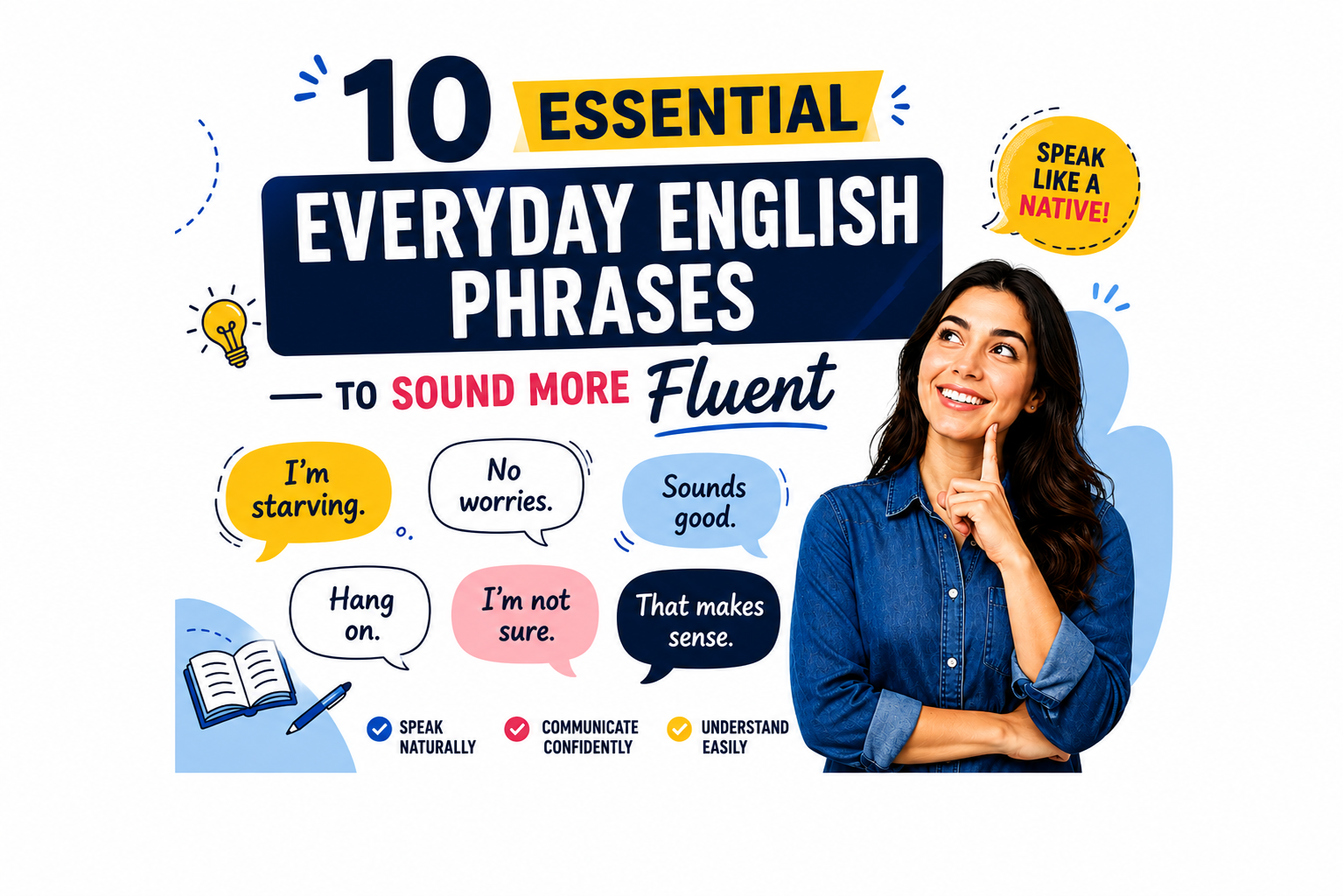

Everyday English phrases are an important part of fluent communication. While grammar and vocabulary are essential, learning the expressions that native speakers use every day can help you sound more natural and confident in conversations.
Many English learners understand English well but struggle to speak fluently. One reason is that they often translate word by word from their native language. Instead, learning everyday English phrases allows you to communicate more smoothly and respond more naturally.
In this article, you’ll learn 10 common expressions that native speakers use regularly and how to use them in real-life situations.
Why Everyday English Phrases Are Important
When native speakers communicate, they rarely think about individual words. Instead, they use phrases and expressions that come naturally to them. By learning these common phrases, you can:
- Sound more natural when speaking English
- Improve your listening skills
- Respond more quickly in conversations
- Build confidence when communicating
- Understand native speakers more easily
Let’s explore 10 useful everyday English phrases that can improve your fluency.
1. “I’m starving.”
Instead of saying:
“I’m very hungry.”
Try:
“I’m starving.”
Meaning: You are extremely hungry.
Example:
“Let’s grab something to eat. I’m starving!”
2. “No worries.”
Instead of saying:
“It’s okay.”
Use:
“No worries.”
Example:
“Sorry I’m late.”
“No worries!”
This phrase sounds friendly, casual, and natural.
3. “Sounds good.”
Instead of simply saying:
“Okay.”
Try:
“Sounds good.”
Example:
“Let’s meet at 6 p.m.”
“Sounds good!”
This is one of the most common responses in everyday conversations.
4. “Hang on.”
Instead of saying:
“Wait.”
Use:
“Hang on.”
Example:
“Hang on a second. I’ll be right there.”
This expression sounds more natural in spoken English.
5. “I’m not sure.”
Instead of saying:
“I don’t know.”
Try:
“I’m not sure.”
Example:
“Do you know where she works?”
“I’m not sure.”
This response often sounds more polite and thoughtful.
6. “That makes sense.”
Use this phrase when you understand someone’s explanation.
Example:
“Oh, that makes sense now.”
You’ll hear this expression frequently in conversations, classrooms, and meetings.
7. “I’ll figure it out.”
Meaning: You will find a solution on your own.
Example:
“Don’t worry about it. I’ll figure it out.”
This phrase shows confidence and independence.
8. “It depends.”
Native speakers often use this phrase when the answer isn’t simply yes or no.
Example:
“Do you enjoy working from home?”
“It depends on the situation.”
This is a useful expression for discussions and opinions.
9. “I’m just kidding.”
Use this expression after making a joke.
Example:
“You need to pay me a million dollars. I’m just kidding!”
It helps make your humor clear and avoids misunderstandings.
10. “I can’t wait.”
Meaning: You are very excited about something in the future.
Example:
“I can’t wait for my holiday!”
This is one of the most common expressions used by native speakers.
Why Learn Phrases Instead of Individual Words?
Many English learners spend hours memorizing difficult vocabulary. However, fluent speakers often communicate effectively using simple words combined into natural expressions.
When you learn complete phrases, you don’t have to stop and think about every word. The phrase becomes automatic, helping you speak more smoothly and confidently.
For example, instead of translating “I’m very hungry,” you can instantly say, “I’m starving.” This makes your English sound more natural and fluent.
How to Practice Everyday English Phrases
Learning everyday English phrases is only the first step. To remember them, you need to use them regularly.
Here are a few simple ways to practice:
- Write your own example sentences.
- Use the phrases in text messages.
- Practice speaking aloud in front of a mirror.
- Listen for these expressions in movies, podcasts, and YouTube videos.
- Use them during English conversations with friends or language partners.
The more often you use a phrase, the more natural it will become.
Quick Practice Challenge
Choose three phrases from this list and use them today:
- In a conversation
- In a text message
- During your English practice
- While talking to yourself
Small daily practice can make a huge difference in your English fluency. To improve your pronunciation, you can also practice with lessons from BBC Learning English
Final Thoughts
Improving your English doesn’t always require learning complicated grammar or advanced vocabulary. Sometimes, mastering a few everyday English phrases can make a bigger impact on your fluency and confidence.
Start using these expressions today, and you’ll soon notice that your English sounds more natural, more fluent, and more like that of a native speaker.
