
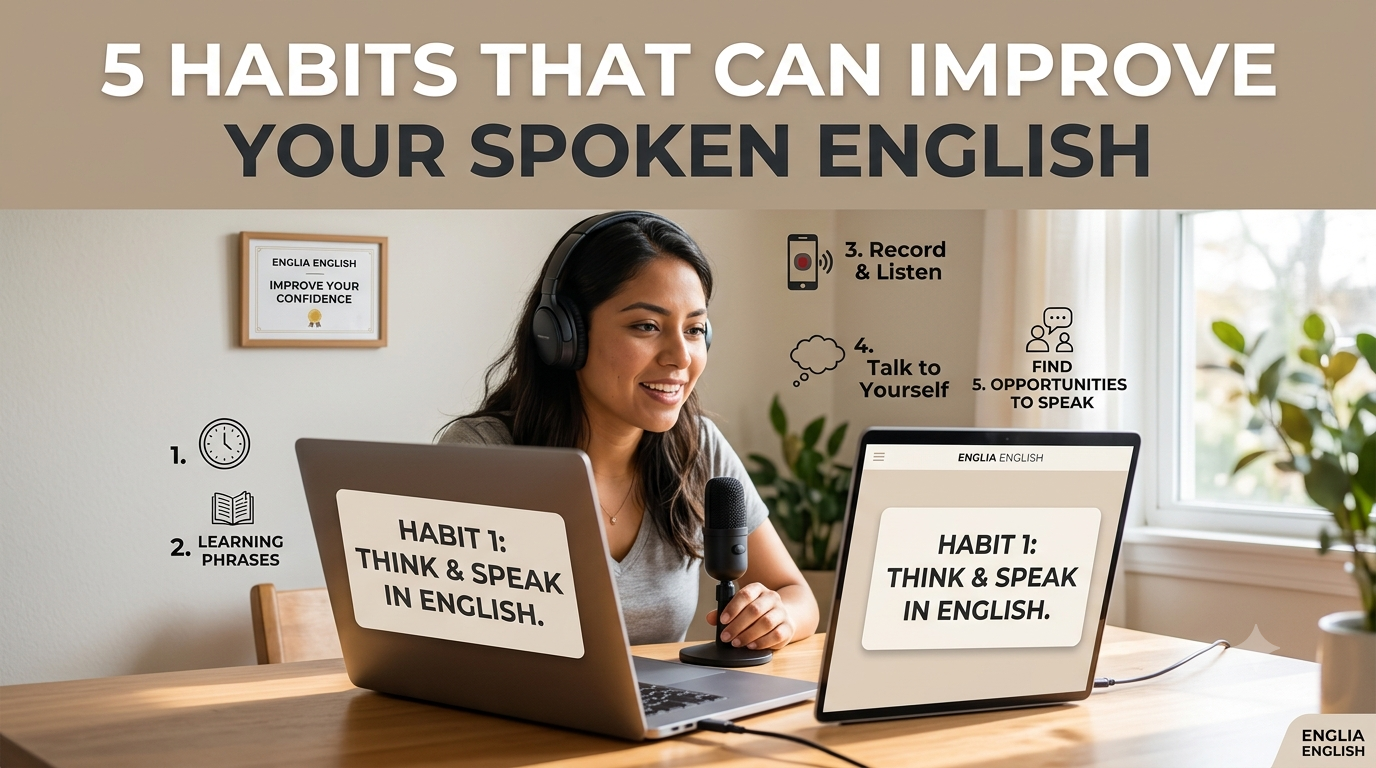

Improving your spoken English doesn’t mean studying English for hours every day. Small, consistent habits can help you speak more naturally, build confidence, and feel more comfortable using English in everyday situations.
Many English learners understand grammar and know plenty of vocabulary, but still feel nervous when they have to speak. This is often because they don’t get enough opportunities to use English actively.
The good news is that you don’t need to completely change your routine. A few simple habits can make a real difference.
Here are five simple habits you can add to your daily routine to improve your spoken English.
1. Talk to Yourself in English
It might feel strange at first, but talking to yourself is an easy way to practise when you don’t have someone to speak with.
Describe what you’re doing, what you’re planning, or what you can see around you.
For example:
“I’m making coffee.”
“I need to finish this work before lunch.”
“I think I’ll go for a walk later.”
You don’t need to make complicated sentences. The goal is to get used to forming thoughts in English without constantly translating from your first language.
2. Stop Looking for the Perfect Sentence
Many learners know what they want to say but stay silent because they’re trying to make every sentence grammatically perfect.
Speaking is not the same as writing.
If you make a small mistake while speaking, keep going. You can correct yourself when necessary, but don’t let every mistake stop the conversation.
Instead of thinking:
“Is this sentence 100% correct?”
Try thinking:
“Can I communicate my idea clearly?”
Accuracy is important, but confidence and fluency also develop through practice.
3. Learn Phrases, Not Just Words
Learning individual vocabulary words is useful, but knowing how those words are commonly used can make your English sound much more natural.
For example, don’t only learn the word decision.
Learn the phrase:
make a decision
Instead of memorising only interested, learn:
interested in
Then practise them in complete sentences:
“I need to make a decision soon.”
“I’m interested in learning Spanish.”
When you learn vocabulary in phrases, it’s often easier to remember and use it when speaking.
4. Record Yourself Speaking
You don’t need expensive equipment or a special app. Your phone is enough.
Choose a simple topic and speak for one or two minutes.
You could talk about:
- what you did today
- your plans for the weekend
- a recent trip
- your favourite movie
- something you learned recently
Then listen to the recording.
Pay attention to things like repeated words, long pauses, pronunciation, and sentences that you struggled to complete.
You don’t need to fix everything at once. Choose one or two things to improve and try the same activity again a few days later.
You’ll be able to notice your progress over time.
5. Use English in Your Daily Life
English practice doesn’t have to happen only during an English lesson.
Look for small opportunities to use English throughout your day.
You can:
- change your phone language to English
- read a short article
- watch a video in English
- write your shopping list in English
- search for information in English
- describe your plans in English
- send yourself short notes in English
Even 10–15 minutes of active practice each day can help you become more comfortable with the language.
The important thing is consistency.
Make English Part of Your Routine
Improving your spoken English isn’t about finding one perfect method.
It’s about giving yourself more opportunities to think, listen, speak, and make mistakes in English.
You don’t have to wait until your English is perfect before you start speaking.
Start with simple sentences. Speak about familiar topics. Learn useful phrases. Listen to yourself. And most importantly, keep practising.
The more often English becomes part of your everyday life, the more natural speaking can become.
Looking for regular speaking practice with a teacher? Discover our English conversation practice sessions.
